Alpha Chi induction recognizes academic excellence
Alpha Chi held its annual induction ceremony on March 3, 2026, to recognize students for academic excellence.  ...
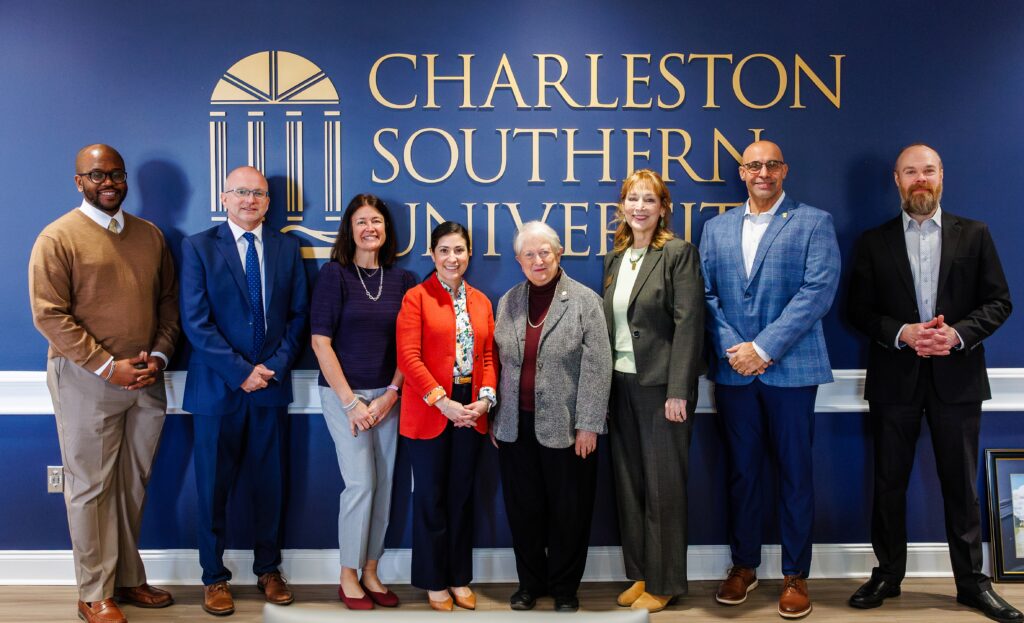
Anthony Dixon, Berkeley County School District; Jeff Beckwith, Dorchester County School District Four; Katie Barker, Dorchester County School District Two; Vanessa Denney, Charleston County School District; Frances Welch, College of Charleston; Julie Fernandez, Charleston Southern University; Leonard Annetta, The Citadel; Michael Shanshala, Trident Technical College. Photo by Dan Steffy, Charleston Southern University
On Thursday, February 26, 2026, Charleston Southern University hosted a regional convening of Lowcountry education leaders as four Colleges of Education deans and four district leaders met to strengthen collaboration aimed at improving schools and supporting educators across the region.
Participating Higher Education Leaders
Participating District Leaders
The meeting reflected a shared commitment to ensuring that every child in the Lowcountry has access to high-quality teaching and leadership.
“Partnerships make for good work and positive outcomes,” said Dean Frances Welch, School of Education, College of Charleston.
Key Discussion Highlights
Expanded Partnerships for Professional Development
Leaders discussed strengthening partnerships among the four Colleges of Education and the four school districts to provide coordinated, district-tailored professional development for teachers and school leaders. The group emphasized designing professional learning experiences that directly support classroom effectiveness, instructional leadership, and district priorities.
Alignment to South Carolina Standards
Participants reinforced the importance of ensuring that future teachers trained at their institutions consistently ground lesson preparation in South Carolina academic standards. Deans affirmed their commitment to preparing teacher candidates who understand standards-based planning as the foundation of instructional excellence.
Artificial Intelligence Policies and Responsible Use
The group discussed how districts and higher education institutions were implementing AI tools and the need for shared policies to guide ethical and effective use. Leaders emphasized that AI should serve as a tool to enhance learning—not replace it. A key priority identified was teaching students to use AI responsibly without bypassing the learning process or relying on AI to demonstrate knowledge in place of authentic understanding.
Expanding Teacher Credentials for Dual Credit Instruction
Participants emphasized increasing opportunities for qualified public-school teachers to earn the credentials necessary to teach college-level courses in high schools. Strengthening this pathway allows districts to expand dual credit offerings while supporting teacher professional growth and leadership.
The group underscored the importance of offering dual credit courses that serve as foundational, transferable coursework applicable to nearly any college or university. Prioritizing general education and core courses ensures that students’ efforts translate into meaningful progress toward a degree, regardless of where they enroll.
Leaders highlighted the powerful role dual credit plays for students who may not initially view college as a viable pathway. Early success in college-level coursework can build confidence, reduce financial barriers, and help students envision themselves as future college graduates.
The discussion also focused on strengthening Teacher Cadet programs to encourage students who are genuinely committed to pursuing careers in education. Leaders emphasized distinguishing between students seeking college credit and those demonstrating a true calling to teach, ensuring that the program remains a strong, intentional pipeline into the profession.
Teacher Training Pathways
Superintendents and deans examined district needs for professional development and graduate degree pathways, including support structures for PACE teachers and alternative certification candidates. Leaders affirmed their shared commitment to designing flexible, responsive training aligned with district priorities and instructional goals.
To strengthen alignment, each district agreed to compile and share a list of needed professional development opportunities and courses that will directly support their instructional programs. These lists will guide the Colleges of Education in developing targeted offerings, including graduate coursework, microcredentials, and customized professional learning.
In addition to instructional alignment, participants emphasized the importance of providing practical support to help teachers navigate the daily challenges of the profession. Future professional development will address classroom management, student engagement, workload balance, and strategies that sustain teacher well-being and effectiveness, ensuring educators feel supported and equipped to succeed.
The convening concluded with a commitment to meet annually to coordinate educator preparation and district support efforts across the Lowcountry. By aligning higher education programs with district initiatives, leaders reaffirmed their shared goal of ensuring that every child in the Lowcountry experiences success.

Alpha Chi held its annual induction ceremony on March 3, 2026, to recognize students for academic excellence.  ...
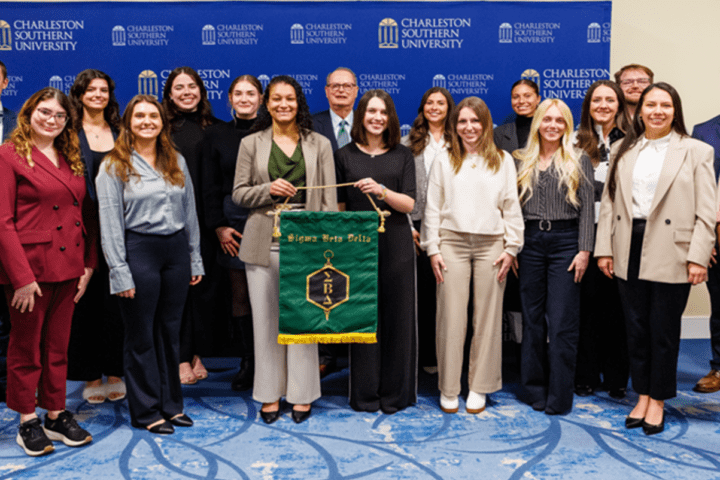
The Hans A. Nielsen College of Business honored 23 students who attained superior academic records by inducting them int...
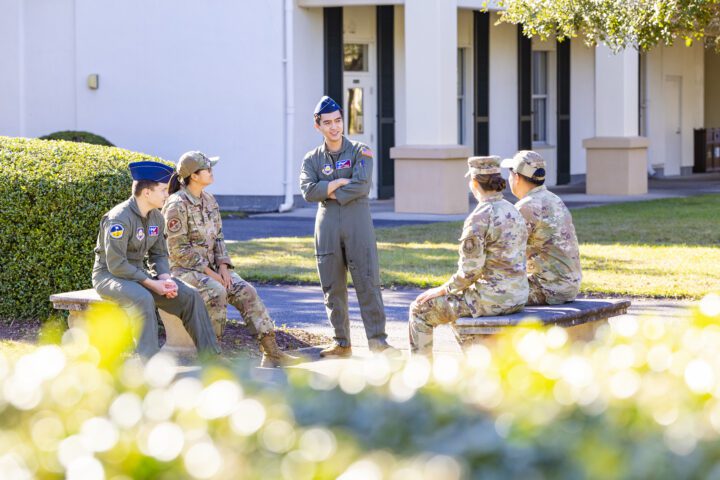
Charleston Southern University has earned the 2026-2027 Military Friendly® Schools Designation as a Military Frien...