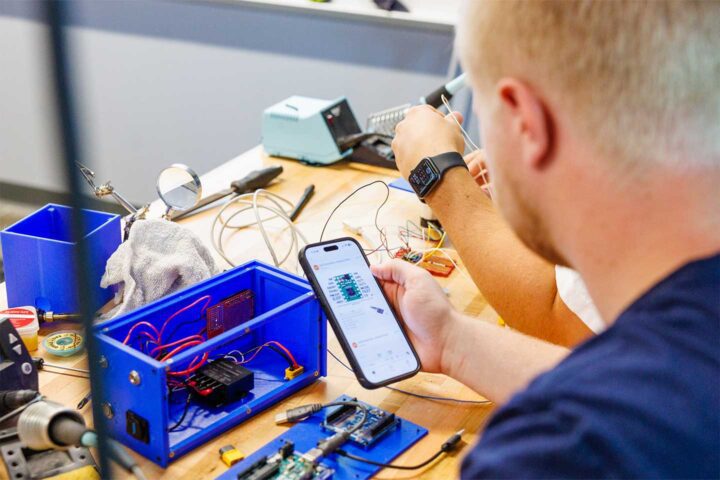
What can you do with a degree in engineering?
Engineering degree careers An engineering degree can lead to more career paths than you might realize. Earning a bachelo...

Having a degree in criminal justice opens more doors than people realize. While most think criminal justice has to do with police officers or detectives, there are a lot more opportunities than just that.
While getting their degree, students in the major will develop skills such as communication, leadership, and problem solving which will help them in many careers.
In simple terms, criminal justice is society’s system for dealing with crime. It is made up of three parts: police, courts, and corrections. It’s the system in which crimes are detected, investigated, punished, and prevented for the future.
A police officer, also known as a patrol officer, is a frontline law enforcement official who is assigned to a specific area to maintain peace and prevent crime. They respond to emergency calls, conduct traffic, investigate activities that may be suspicious, and patrol areas they are assigned.
A crime and intelligence analyst gathers and evaluates data into insights to help solve clues. They gather information on criminals, track crime patterns, build suspect profiles, and connect the dots to spot hidden patterns. They help police figure out where to patrol next and who to look out for.
A special agent works for the government to investigate major crimes. They handle more complex cases like financial fraud, drug trafficking, or terrorism.

A state trooper, also called highway patrol, is a specialized law enforcement officer who works and patrols roads. They ensure highway safety, patrol major highways, enforce vehicle laws, respond to car accidents, and assist stranded drivers. State Troopers act as a backup for local police.
A paralegal supports attorneys by researching case law, drafting documents, managing case files, and communicating with clients, under the supervision of a licensed attorney. They handle essential legal work.
A court clerk makes sure that the courtroom is running smoothly. They manage the paperwork, swear in witnesses, handle evidence, and record the proceedings. They are often considered the assistant to the judge.
A victim advocate supports people who have been affected by a crime or traumatic event. They provide emotional support while also helping them understand their legal rights, help them navigate the court system, and provide them with resources like safety plans, counseling or financial aid.
A private investigator is a professional who gathers facts, analyzes and reports information for individuals, businesses, and lawyers. Their job consists of uncovering hidden information that cannot be easily obtained, locating missing people, or verifying claims. They are essentially nonpolice detectives.
A loss prevention investigator protects a store or company and its merchants from shoplifting, fraud, and policy violations. They monitor the store often using security cameras to spot potential shoplifters and to identify suspicious behavior. They help prevent financial loss for the store or company.
A crime analyst studies data to help solve crimes. They evaluate data from police reports, 911 calls, and arrest records to identify crime trends and connect clues. They provide actionable intelligence to help solve crime cases.
A probation officer monitors and rehabilitates individuals that have been sentenced to probation instead of jail. They help keep the public safe while helping the individuals return into society. They enforce court ordered rules, administer drug tests, and give the individual’s resources, like job training or counseling.
A correctional treatment specialist is sometimes also called a case manager or a correctional counselor. They evaluate prison inmates, and create rehabilitation plans that are personalized and help them return to society by giving them the resources they need to reduce the chance they return to crime.
Juvenile counselors are a mentor to troubled youth in both schools and correctional facilities. They figure out the root cause of their bad behavior and give them the resources they need to overcome problems so they can make smarter choices.
CSU offers a Master of Science in criminal justice. This program offers a more advanced understanding of criminal justice, such as causes and consequences of crime, and society’s reaction to criminal and delinquent behavior. There are two tracks students can go: Thesis, which is designed for students who may be considering law school or a doctoral degree, and Nonthesis, which is designed for students who are generally already working within the field and are seeking professional development opportunities.
Getting a degree in criminal justice is a foundation for making a meaningful difference in society. It is more than a pathway to one career, but a big range of opportunities that match one’s skills and interests. With new technology forming almost every day as well as society changes, careers in criminal justice are in a high demand. Getting a degree in criminal justice can open a door to a very rewarding career.
Students will take classes such as Intro to Criminal Justice, Police Systems and Practices, Theories of Crime and Justice, Criminal Law, Organized Crime, and more.
Adrienne Antley, author, is an intern in the CSU Marketing & Communication Office and is a double major in communication and public health.
Learn more about the College of Humanities and Social Sciences at Charleston Southern.

CSU Media features are created by staff, faculty, or guests of Charleston Southern University in collaboration with the Office of Marketing & Communication.
Engineering degree careers An engineering degree can lead to more career paths than you might realize. Earning a bachelo...

Computer science degree careers In a world where technology continues to shape how one lives, a computer science degree...

Christian studies Degree Careers Getting a degree in Christian Studies is helpful, even outside of a church. The skills...