
What can you do with a criminal justice degree?
Criminal justice degree careers Having a degree in criminal justice opens more doors than people realize. While most thi...
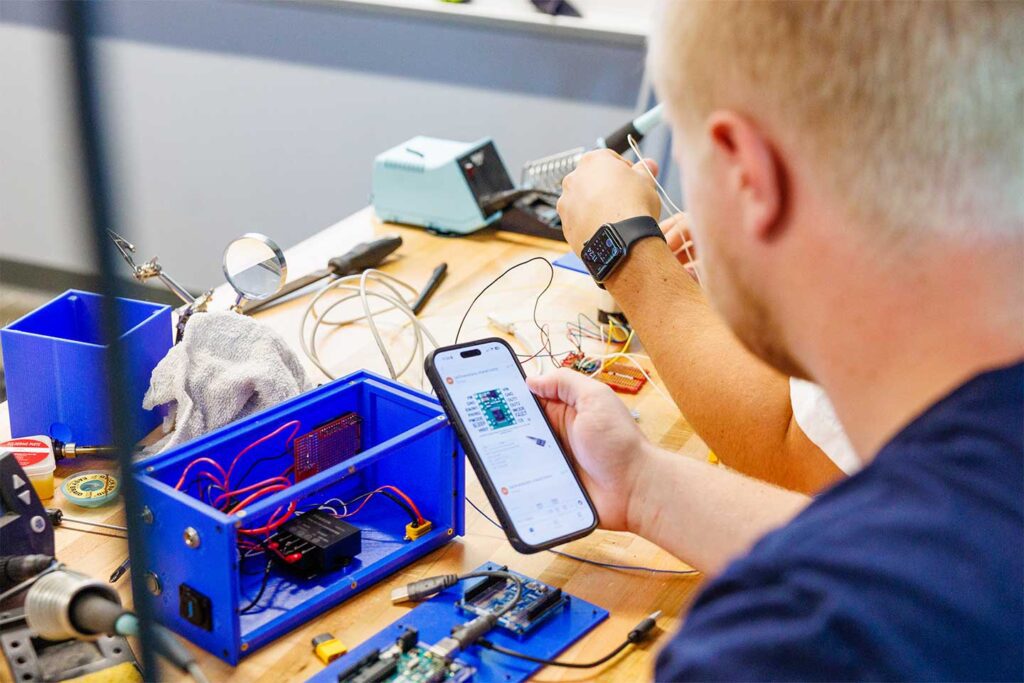
An engineering degree can lead to more career paths than you might realize. Earning a bachelor’s degree in engineering develops problem-solving and creative-thinking skills that are valuable across a wide range of careers.
Engineering is the art of solving real-world problems. “Generally speaking, engineering is a profession in which knowledge of the mathematical and natural sciences, gained by study, experience, and practice, is applied to develop solutions to real-world problems,” said Joel Chapman, associate professor of mechanical engineering at Charleston Southern University.

Mechanical engineering is the study of objects and things that move. “Mechanical engineering is a branch of engineering that combines physics and mathematics with materials science to design, analyze, manufacture, and maintain mechanical systems and fluid systems,” said Chapman.
Mechanical engineering touches every aspect of life which includes the human body.
One can create 2D and 3D models of mechanical parts, assemblies, and systems using CAD (Computer-Aided Design) software.
Manufacturing involves designing and improving factory production lines, assembly processes, and automation to reduce waste.
One can design the heating, ventilation, and air conditioning systems for buildings, data centers, or airplanes.
One can develop maintenance methods to keep equipment or factory machinery/operations running smoothly. “Mechanical engineers develop devices and systems ranging from drills, signs, refrigerators, and elevators, to automobiles, aircraft, spacecraft, power plants, and robotic systems,” said Chapman.

Electrical engineering is the study of how electricity works. “Electrical engineering is a branch of engineering concerned with the study, design, and application of technology and systems associated with the use of electricity, electronics, and electromagnetism,” said Chapman.
They figure out how to use their knowledge of electricity to build electrical things.
Hardware engineers build the physical parts and components inside electronics, like consumer laptops and circuit boards.
Engineers in power systems plan and maintain the infrastructure or base that delivers electricity from places like generation plants to consumers, homes and businesses.
Control engineers design and program systems that regulate machinery by making sure the equipment runs safely and correctly.
Engineers in electronics develop and test electronic components like phones, medical instruments, and circuit boards.
Engineers in radio frequency design and test systems that make wireless communication work by developing antennas and radar systems for things like cell phones and Wi-Fi.
A systems engineer oversees and designs big and complicated projects to make sure that all electrical and digital systems work together smoothly.
Engineers in test and validation make sure that electrical products work correctly and are safe before they are released to the public. “Electrical engineers develop devices and systems ranging from toaster ovens, electric motors, GPS devices, radios, and TVs to automobiles, aircraft, and satellites,” said Chapman.
Computer engineering is a branch that combines both electrical engineering and computer science. Computer engineering is a branch of engineering that integrates aspects of computer science and electrical engineering required to develop computer hardware and software, said Chapman.
Hardware engineers are just like electrical hardware engineers, but with computers. They design, develop, and test physical computer parts like processors, circuit boards, and memory devices.
Engineers who work with embedded systems develop software to control specialized hardware devices, such as medical equipment or cars.
Engineers in network design implement and maintain data communication to keep systems connected and running correctly. “Computer engineers design devices and systems ranging from circuit boards, memory devices, microcontrollers, and microprocessors to personal computers, operating systems, routers, and networks,” said Chapman.
Biomedical engineering combines science and healthcare to solve problems in medicine.
Engineers in this career design and build medical equipment like pacemakers, prosthetics, and robotic surgical systems.
A biomechanics engineer studies human movement to develop tools to prevent injury and rehabilitation equipment.
Quality engineers make sure that medical products and pharmaceutics meet the safety and efficacy standards before sending it out to companies.
Engineers in this career help companies navigate FDA standards and look over compliance for new medical technologies.
Field clinical engineers work directly with hospitals to show how medical devices and equipment work.
Clinical engineers act as the bridge between technology and patient care, making sure machines like MRIs and X-ray systems function reliably and safely.
Engineering is more than a degree, it is considered a foundation for many types of career opportunities. The skills one learns in this major can be very helpful and valuable in different types of careers or industries. There are so many paths available, giving students the option to pick a career that fits their interests and strengths.
Students will take classes such as Introduction to Engineering, Statistics, Digital Systems, Control Systems, and more, based on concentration.
Charleston Southern University’s accreditation can be found here. CSU is a member of the Christian Engineering Society.
The Bachelor of Science in Engineering is accredited by the Engineering Accreditation Commission of ABET, under the commission’s General Criteria and Program Criteria for General Engineering.
Adrienne Antley, author, is an intern in the CSU Marketing & Communication Office and is a double major in communication and public health.
Learn more about the Engineering at Charleston Southern.

CSU Media features are created by staff, faculty, or guests of Charleston Southern University in collaboration with the Office of Marketing & Communication.
Criminal justice degree careers Having a degree in criminal justice opens more doors than people realize. While most thi...

Computer science degree careers In a world where technology continues to shape how one lives, a computer science degree...

Christian studies Degree Careers Getting a degree in Christian Studies is helpful, even outside of a church. The skills...